Application Types

Use Cases

CFD is most valuable where airflow behaviour, comfort, ventilation effectiveness, exhaust capture, or containment cannot be confidently assessed using standard calculations alone.

01 — Commercial Offices

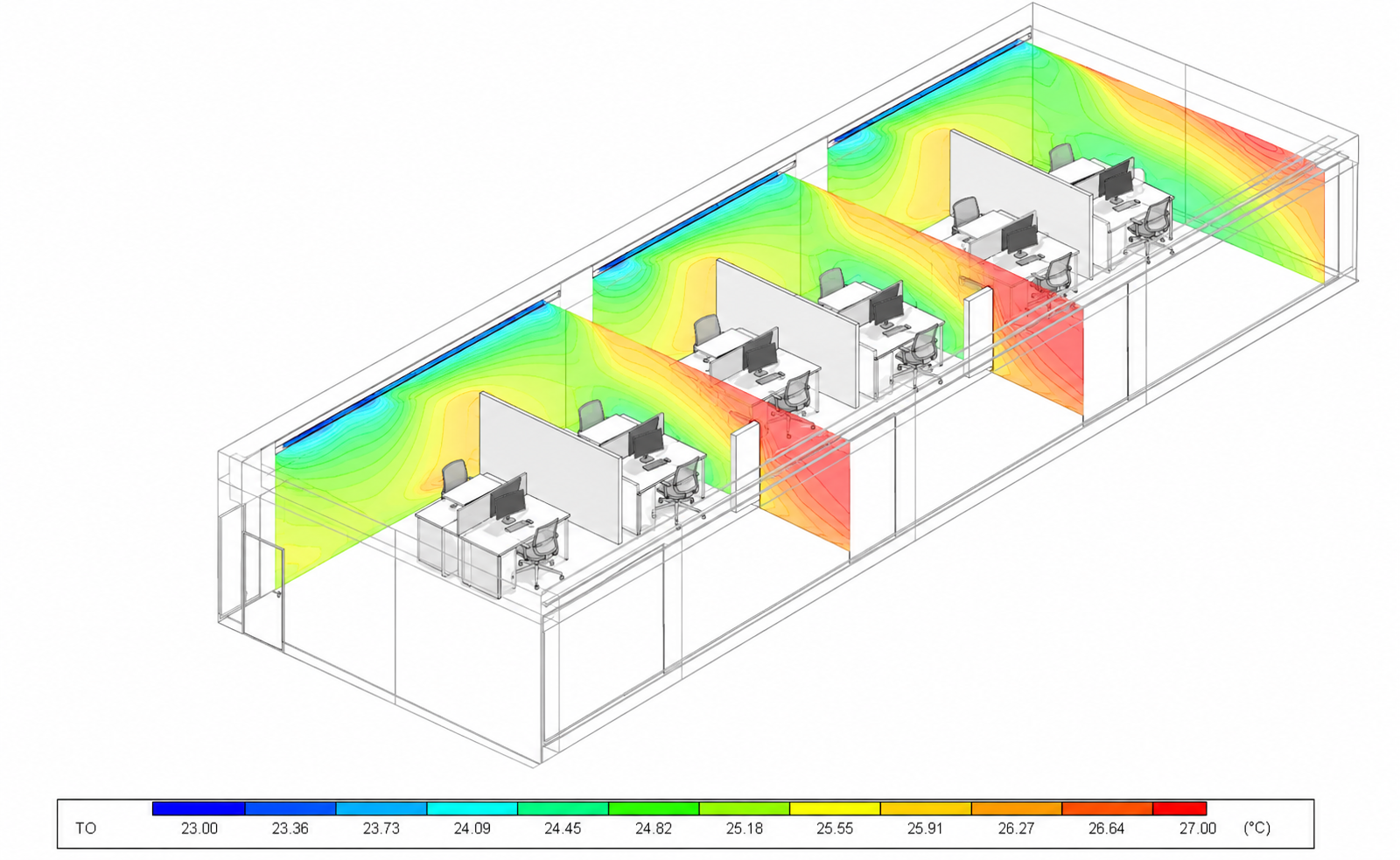
Office air distribution and comfort studies

Evaluate diffuser layouts, supply air throw, return air paths, and occupied-zone comfort for open offices, enclosed rooms, meeting areas, and workstation layouts.

  • Open office and enclosed office layouts
  • Occupied-zone temperature review
  • Supply air throw and return path assessment
  • Comfort around workstations and partitions
  • Draft risk near diffusers or perimeter zones
  • Design option comparison for fitouts
Office workstation CFD simulation
Use CaseOffice Comfort
02 — Multi-Level Buildings

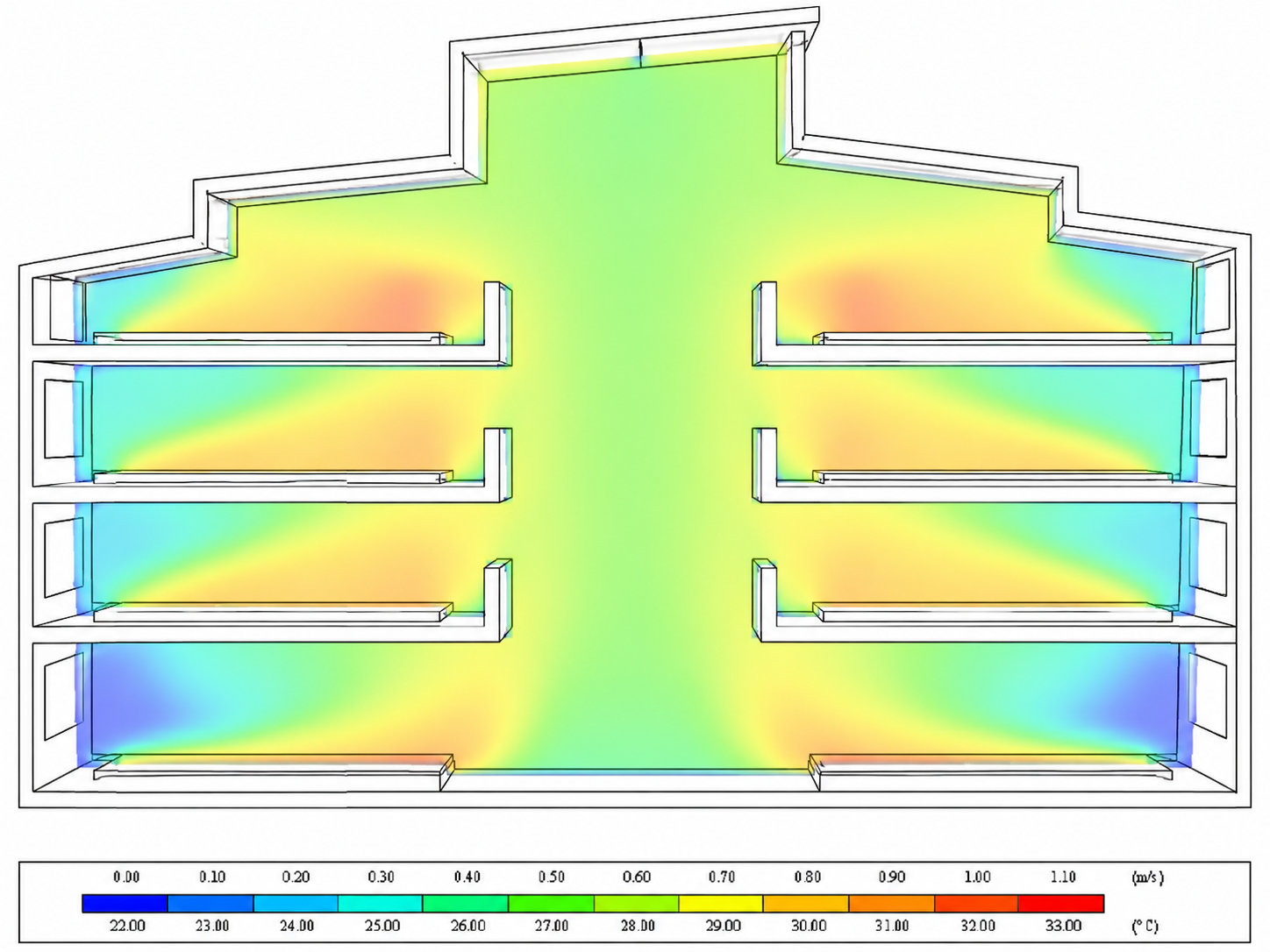
High-ceiling, atrium, and stratification analysis

Assess thermal stratification, multi-level air movement, vertical temperature gradients, and air distribution performance in larger spaces or buildings with complex geometry.

  • High-ceiling and atrium performance
  • Vertical temperature distribution
  • Thermal layering and stratification review
  • Supply air reaching the occupied zone
  • Large-volume ventilation effectiveness
  • Return air and exhaust placement review
Multi-level building CFD simulation
Use CaseStratification
03 — Occupant Comfort

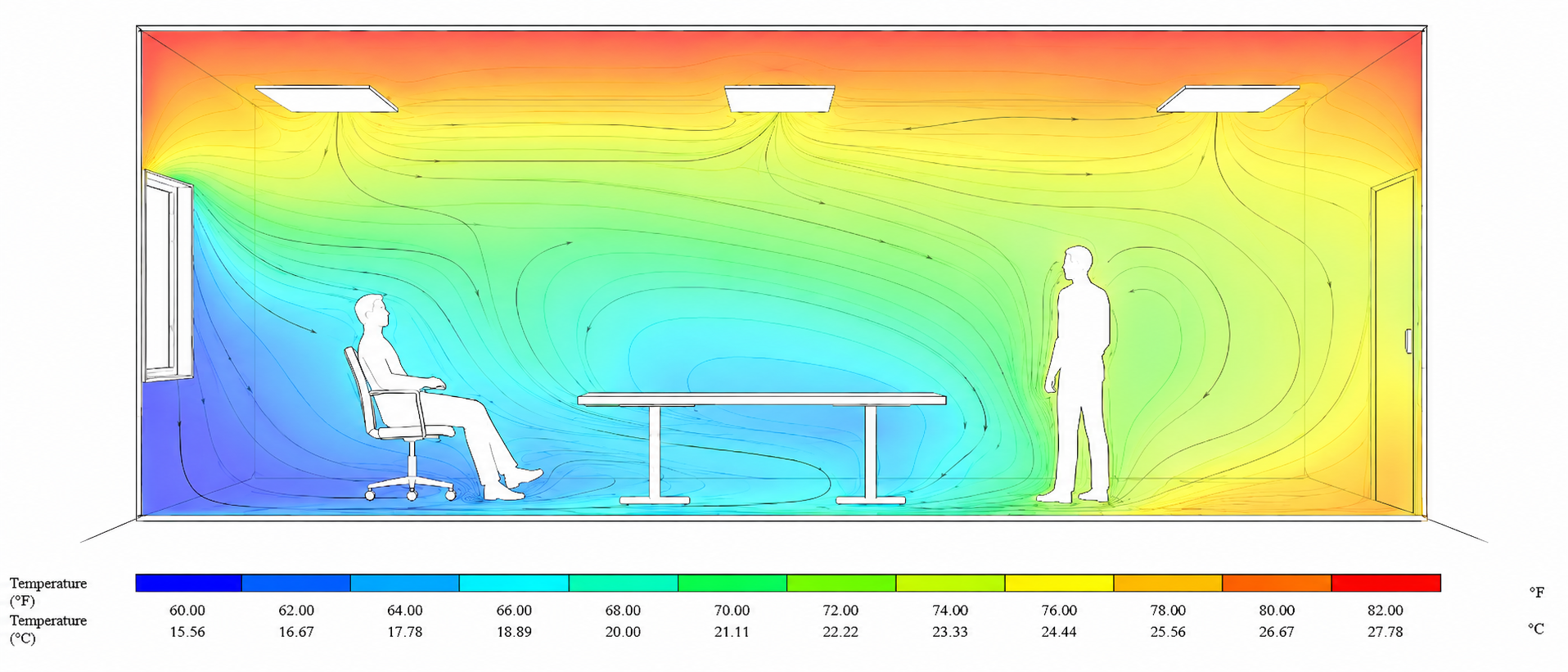
Room-level thermal comfort validation

Model room-level airflow, temperature distribution, diffuser interaction, and comfort performance where standard diffuser selections or load calculations do not fully describe the actual space behaviour.

  • Occupied-zone temperature and velocity plots
  • Diffuser selection validation
  • Draft and stagnant-zone review
  • Thermal gradient visualization
  • Comfort issue troubleshooting
  • Owner-facing visual documentation
Room CFD temperature and airflow visualization
Use CaseThermal Comfort
04 — Healthcare Spaces

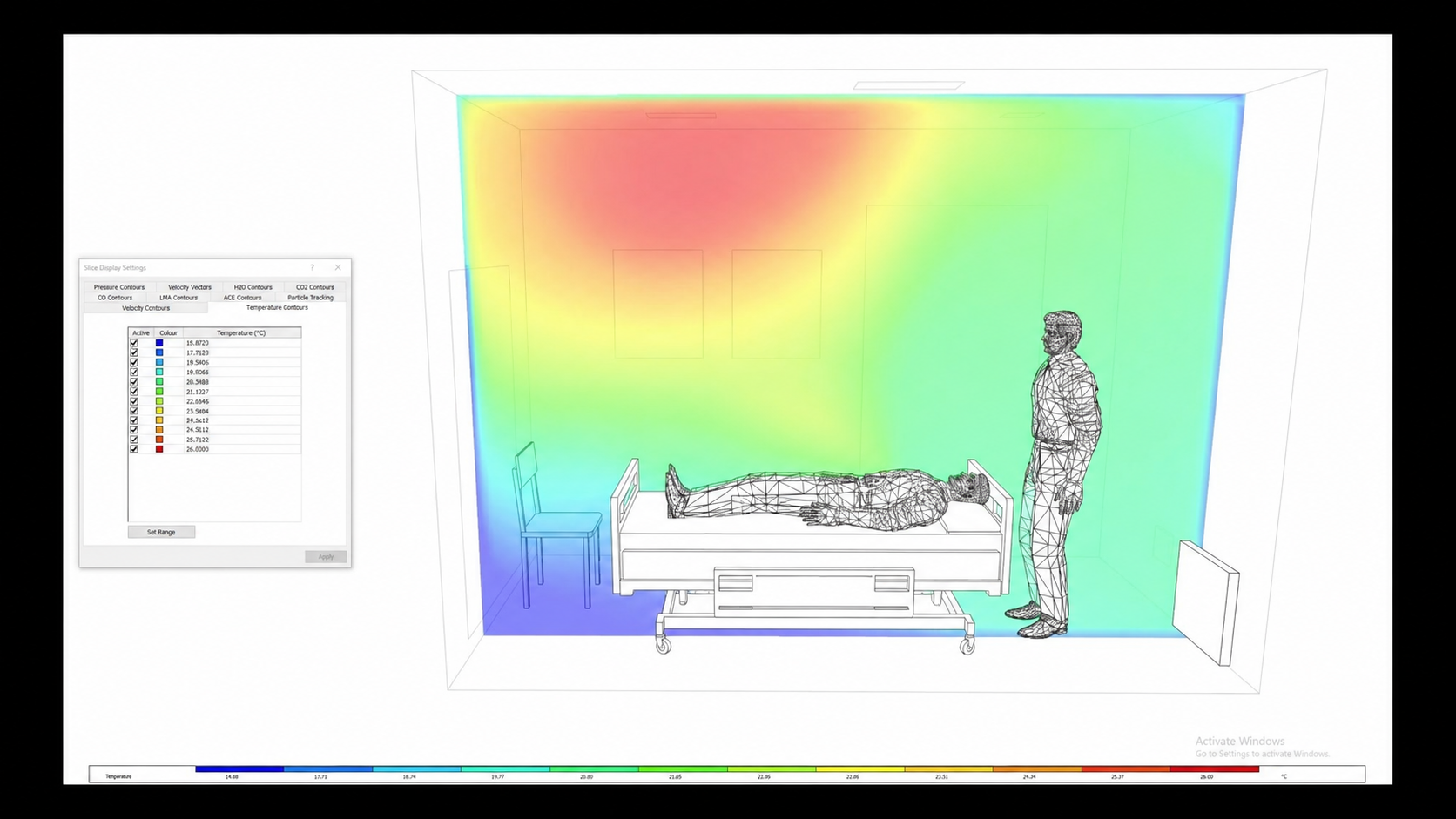
Patient room comfort and containment support

Support healthcare HVAC design questions involving patient comfort, exhaust strategy, directional airflow, dilution, and contaminant migration.

  • Patient room thermal comfort
  • Directional airflow review
  • Containment and dilution visualization
  • Exhaust location effectiveness
  • Airflow around beds and occupants
  • Design-support documentation for review teams
Patient room CFD simulation
Use CaseHealthcare

Additional Applications

Other project types where CFD can add value

CFD can also support specialized rooms, retrofit constraints, owner requirements, peer review questions, and design options that need clear airflow visualization.

Laboratories

Containment and exhaust interaction

Review make-up air interaction, contaminant migration, exhaust capture, and airflow direction.

Data Rooms

Cooling airflow and hot spots

Identify short-circuiting, hot exhaust recirculation, equipment intake temperatures, and cooling effectiveness.

Parking Garages

Ventilation and exhaust coverage

Evaluate exhaust distribution, stagnant zones, jet fan influence, and contaminant dilution patterns.

Retrofit Projects

Existing-condition constraints

Assess whether proposed HVAC modifications perform within existing shaft, ceiling, or architectural limitations.

Performance Spaces

Comfort with architectural constraints

Support diffuser layouts where visible devices, noise, drafts, and environmental stability are sensitive.

High-Occupancy Rooms

Ventilation effectiveness

Analyze fresh air distribution, age of air, and areas with poor mixing under dense occupancy conditions.

Not sure whether your project needs CFD?

Send the project background and the design concern. We can help determine whether CFD is appropriate and what level of analysis is required.

Request a CFD Review